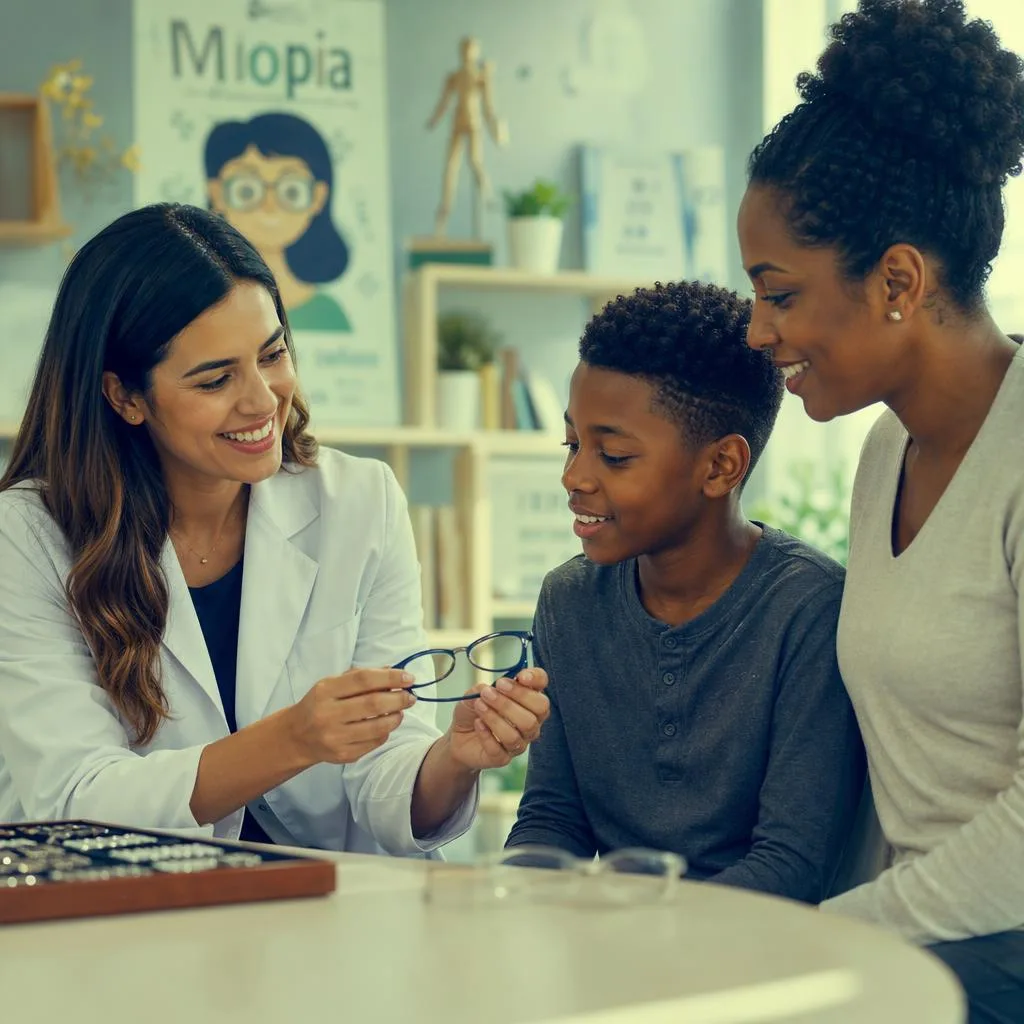
If you’ve never taken a child for an eye exam before, you might wonder: can a toddler even do an eye exam? What if they can’t read yet? What if they won’t cooperate?
The good news is that pediatric eye exams are specifically designed to work with children — not against them. Here’s what you can expect.
When Should a Child Have Their First Eye Exam?
The American Optometric Association recommends:
- First exam at 6–12 months
- Again at age 3
- Before starting kindergarten (around age 5)
- Annually from school age onward
School vision screenings are not a substitute for a comprehensive exam. They check distance visual acuity but miss many conditions entirely — including farsightedness, eye coordination problems, and lazy eye (amblyopia), which can be present even when a child seems to “pass” a screening.
What Happens During the Exam
For Infants and Toddlers
We don’t need a child to read a chart or answer questions to test their vision. For very young children, we use:
- Preferential looking tests — Cards with patterns that attract an infant’s gaze help us assess visual acuity
- Retinoscopy — Shining a light into the eye and observing the reflection lets us measure the prescription without the child saying a word
- Cover tests — Quick tests for eye alignment and coordination
- Pupil response — Checking how the pupils react to light tells us about the health of the visual pathway
For Preschool and School-Age Children
At around age 3, most children can engage with picture-based charts (LEA symbols — shapes like a circle, square, house, and apple) instead of letters. By school age, most can read a standard chart.
The exam will also include:
- Color vision testing — Often done for the first time at this age
- Depth perception check
- Eye movement and coordination assessment
- Eye health evaluation — A look at the front and back of the eye
Dilation (eye drops that widen the pupil) may be recommended to get the most accurate prescription measurement in children. The drops work within 30–45 minutes and cause temporary blurry near vision and light sensitivity, usually lasting a few hours. Bringing sunglasses for the ride home and giving a heads-up to teachers if it’s a school day is a good idea.
How to Prepare Your Child
Talk about it positively. Describe it as “looking at pictures” or “playing an eye game,” not as something to be nervous about.
Bring their glasses if they have them. We’ll want to see how the current prescription is working.
Bring a snack. A hungry or tired child is harder to examine. Plan around nap time for young children.
Bring your insurance card and any relevant medical history. Premature birth, developmental concerns, or a family history of eye problems is helpful context.
Expect the whole visit to take about 45–60 minutes. We never rush children — they set the pace.
Signs Your Child May Have a Vision Problem
Between exams, watch for:
- One eye turning in or out (even occasionally)
- Squinting, blinking excessively, or rubbing eyes frequently
- Tilting the head to see
- Sitting very close to the TV or screen
- Avoiding near tasks like coloring or reading
- Complaints of headaches or tired eyes
- Academic struggles, particularly with reading
Children rarely report vision problems on their own — they assume everyone sees the way they do. Annual exams are how we catch things they won’t tell you about.
Book your child’s eye exam — we love seeing young patients and work hard to make their visit a good one.