
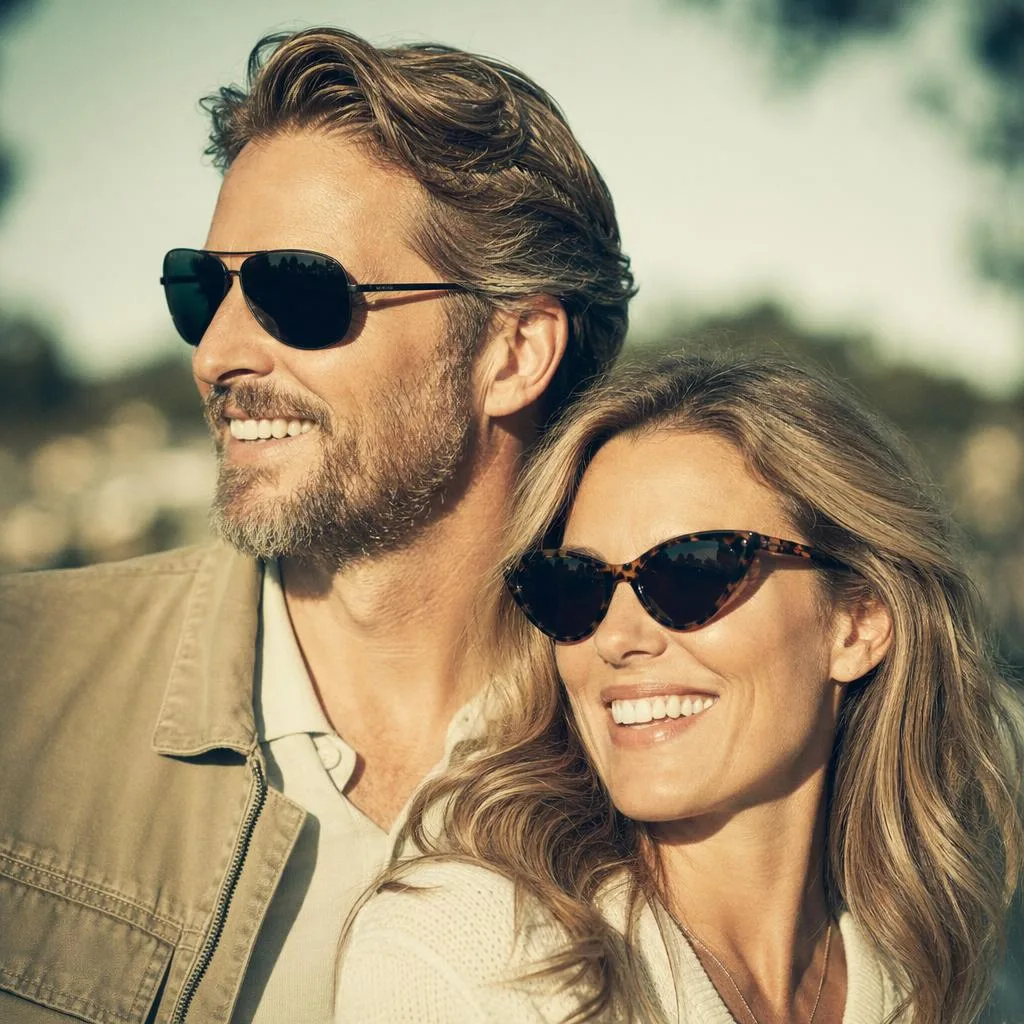
You wouldn’t go out in July without sunscreen. But how often do you leave the house without sunglasses? For many people, sunglasses are an afterthought — a fashion accessory for squinting on particularly bright days. In reality, UV protection for your eyes is just as important as protecting your skin.
What UV Radiation Does to Your Eyes
Ultraviolet radiation from the sun falls into two main categories that reach the earth’s surface: UVA and UVB. Both cause cumulative damage to eye tissue over time.
Short-term: Excessive UV exposure can cause photokeratitis — essentially a sunburn on the surface of the eye. It’s painful and temporarily affects vision. Skiers and beachgoers are particularly vulnerable (snow and water both reflect and amplify UV).
Long-term, UV exposure is linked to:
- Cataracts — The leading cause of preventable blindness worldwide. UV damage to the lens accumulates over decades.
- Macular degeneration — UV light contributes to oxidative damage in the macula, the central part of the retina responsible for sharp vision.
- Pterygium — A fleshy growth on the white of the eye (and occasionally onto the cornea) common in people with significant outdoor exposure.
- Eyelid skin cancers — The thin skin of the eyelid is sun-exposed and frequently overlooked.
The Myth of “More Expensive = More Protection”
UV protection has nothing to do with lens darkness, price, or brand. A $10 pair of sunglasses with 100% UVA/UVB protection is better for your eyes than $200 fashion frames with no UV coating.
Look for:
- 100% UV400 protection — This is the standard. It blocks UV wavelengths up to 400 nanometers, covering both UVA and UVB.
- Polarized lenses — These don’t add UV protection but dramatically reduce glare from horizontal surfaces (water, roads, snow), which improves comfort and visibility significantly.
- Wraparound style — For outdoor activities, frames that limit light entering from the sides offer better protection.
When to Wear Them
The honest answer: more often than you probably do.
- Overcast days — UV penetrates cloud cover. Up to 80% of UV radiation reaches the ground on cloudy days.
- Winter — Snow reflects up to 80% of UV, making ski conditions particularly intense.
- Near water — Water reflects and concentrates UV exposure.
- Morning and late afternoon — The sun is lower and light enters your eyes at a more direct angle.
Children are especially vulnerable — their lenses are clearer, allowing more UV to reach the retina. Getting kids comfortable wearing sunglasses early is one of the best habits you can build.
Prescription Sunglasses
If you wear glasses, you have options beyond clip-ons and fitover frames. Prescription sunglasses give you your full correction in a dedicated outdoor pair — many of our patients keep a pair in the car and wonder how they lived without them.
Photochromic lenses (Transitions) are another option: clear indoors, automatically darkening outdoors. They’re convenient for everyday use, though they don’t darken as quickly in cars (windshields block UV) and may not get quite as dark as dedicated sunglasses for very bright conditions.
Our optical team can help you find the right solution for your prescription and lifestyle — whether that’s a second pair, photochromics, or a set of polarized prescription sunglasses for the boat.
Visit our Eyewear Gallery or book an appointment to discuss your options.